

A Personal Journey Across the Alhambra
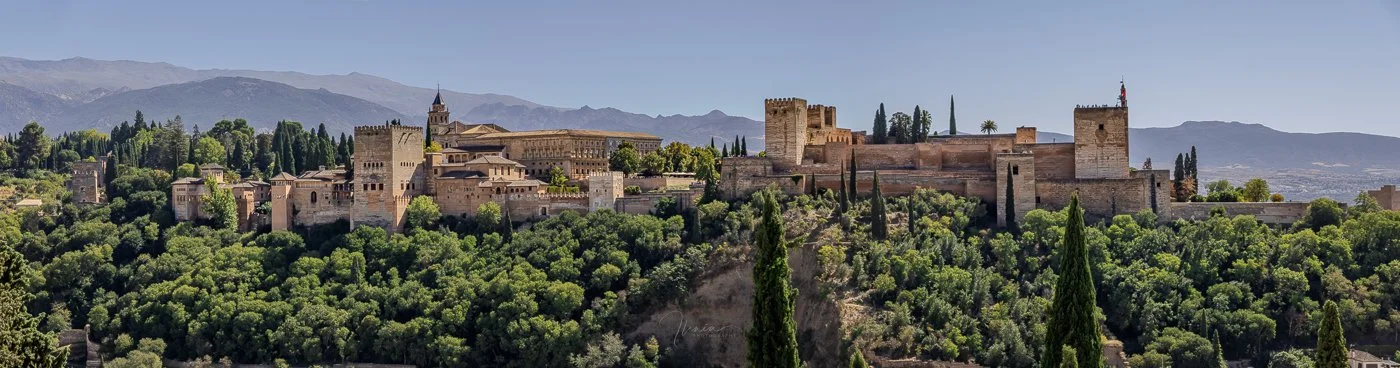
The Alhambra seen from the Mirador de San Nicolás in the Albaicín.
I visited the Alhambra on a warm afternoon in September 2024. The entire complex, palaces, gardens, towers, and fortified walls, is a UNESCO World Heritage Site, recognized for its exceptional testimony to the Nasrid dynasty, the last Islamic kingdom of Al-Andalus. I had seen photographs of its courtyards, pools, and arches for years, but walking through them with my camera felt different. Quieter. Slower. More intentional.

Photo taken from inside the Alhambra complex, from one of the viewpoints near the Alcazaba
Near the Alcazaba, I stopped at a quiet viewpoint and admired the Albaicín. Its layered rooftops, tall cypress trees, and soft light revealed how Granada balances centuries of history with the rhythm of everyday life.
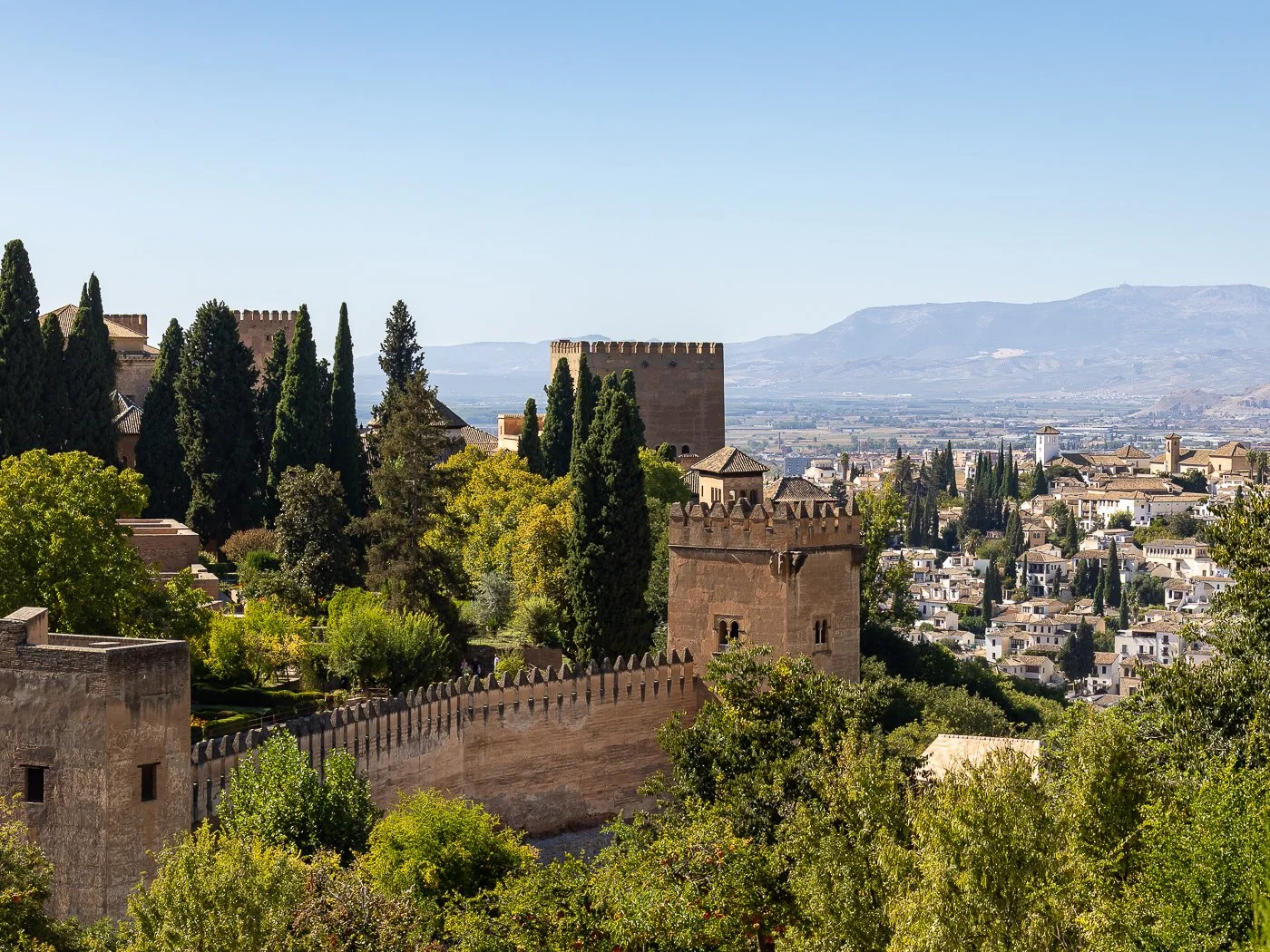
This photo shows the Alhambra’s defensive walls and towers, viewed from the Generalife / upper gardens area
From the upper gardens of the Generalife, the Alhambra’s defensive walls and towers unfold across the hillside. The geometry of the fortress contrasts beautifully with the soft cypress silhouettes and the brightness of the Albaicín below.
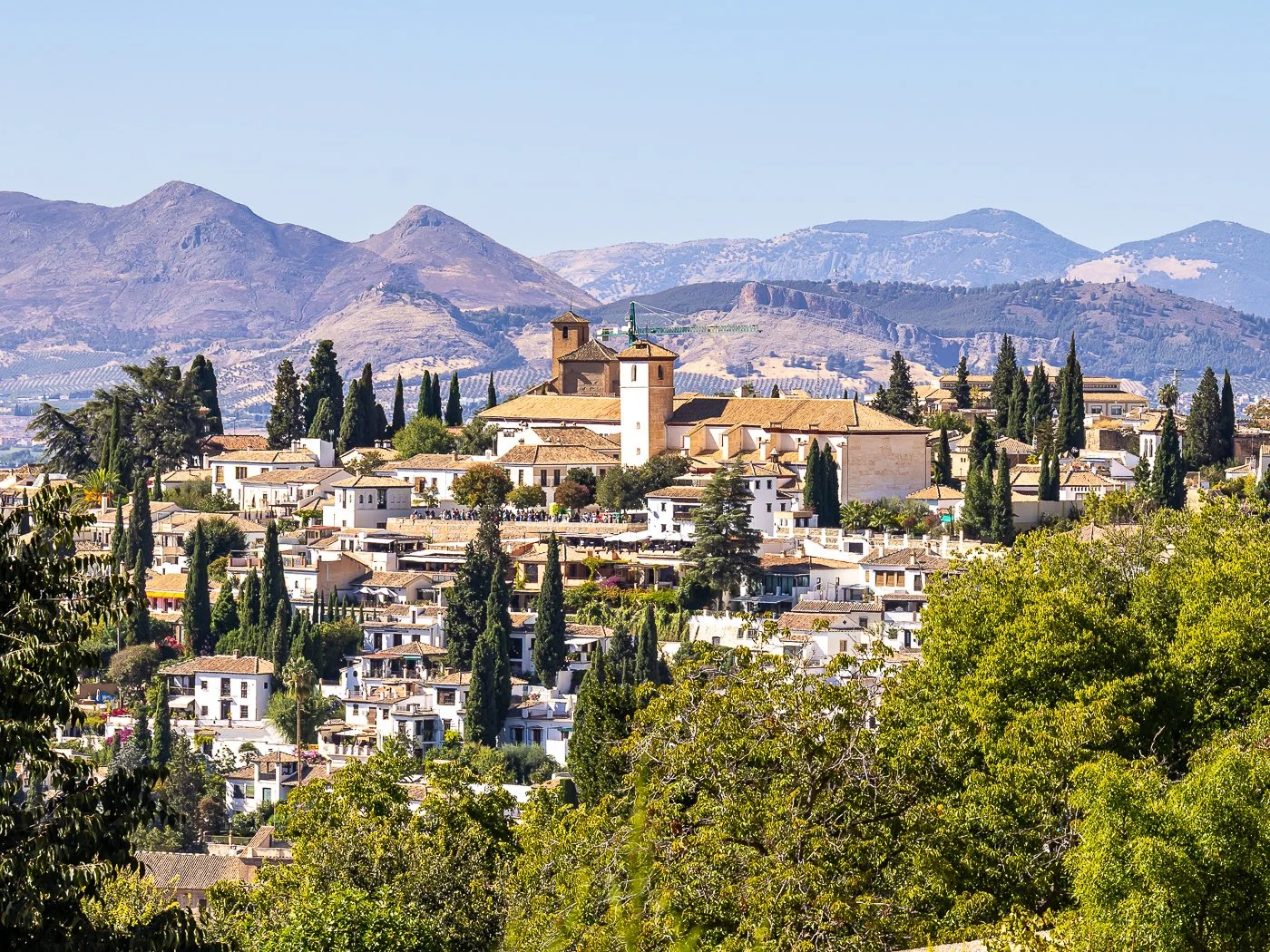
View of the Albaicín (Albayzín) neighborhood seen from the Alhambra/Generalife side
From the Generalife side, the Albaicín rises in soft layers of white houses, terracotta roofs, and cypress silhouettes. Its steep, winding streets seem to fold into the hillside, carrying centuries of Moorish heritage in their layout and rhythm.
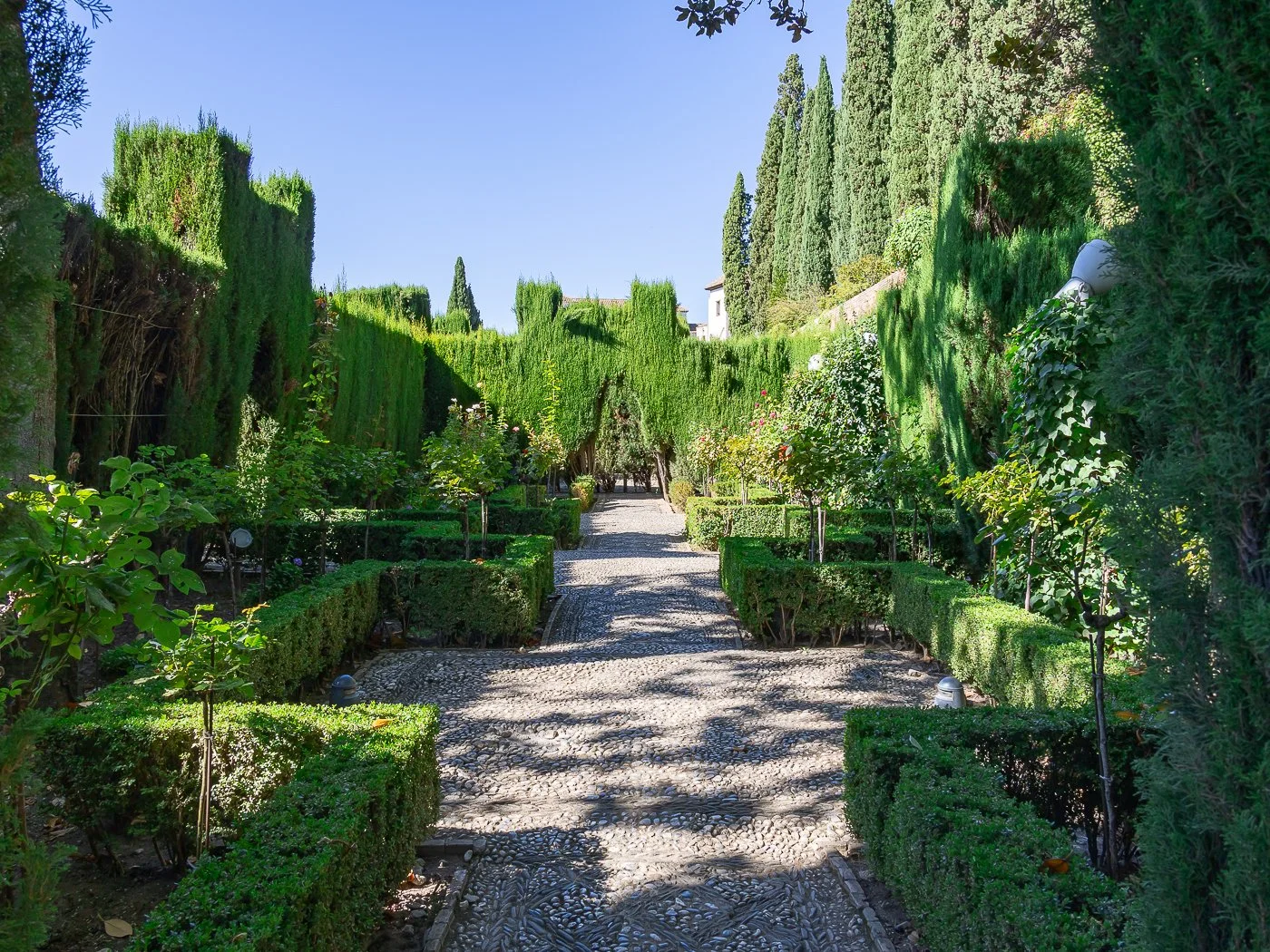
View of the Generalife Gardens, specifically the Lower Gardens (Jardines Bajos)
The Lower Gardens of the Generalife feel like a quiet passageway into another time. Pebbled paths, sculpted hedges, and rows of roses create a rhythm that invites you to slow down.
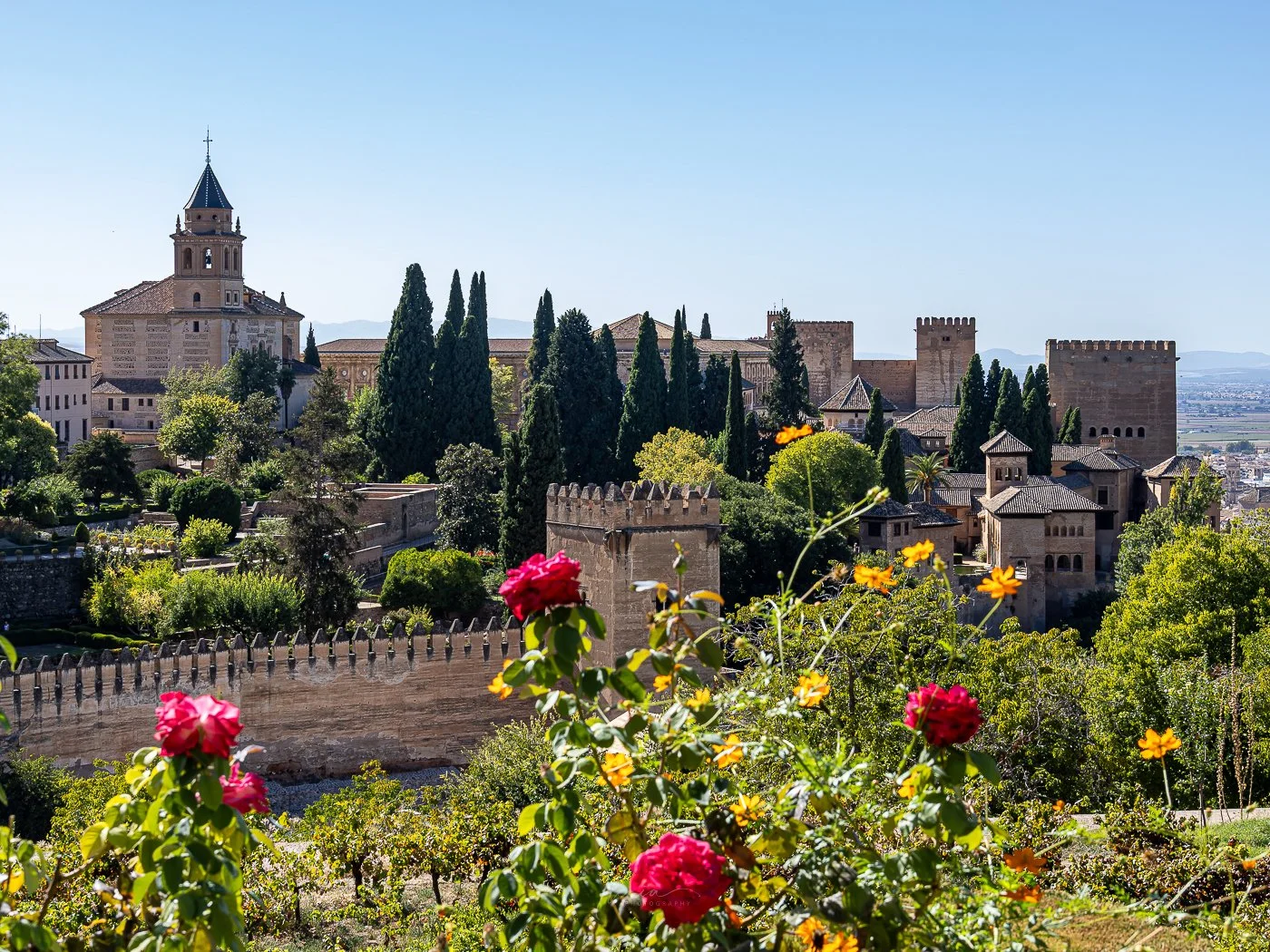
View from the Generalife gardens at Convento de San Francisco / Parador de Granada (the former Franciscan monastery)
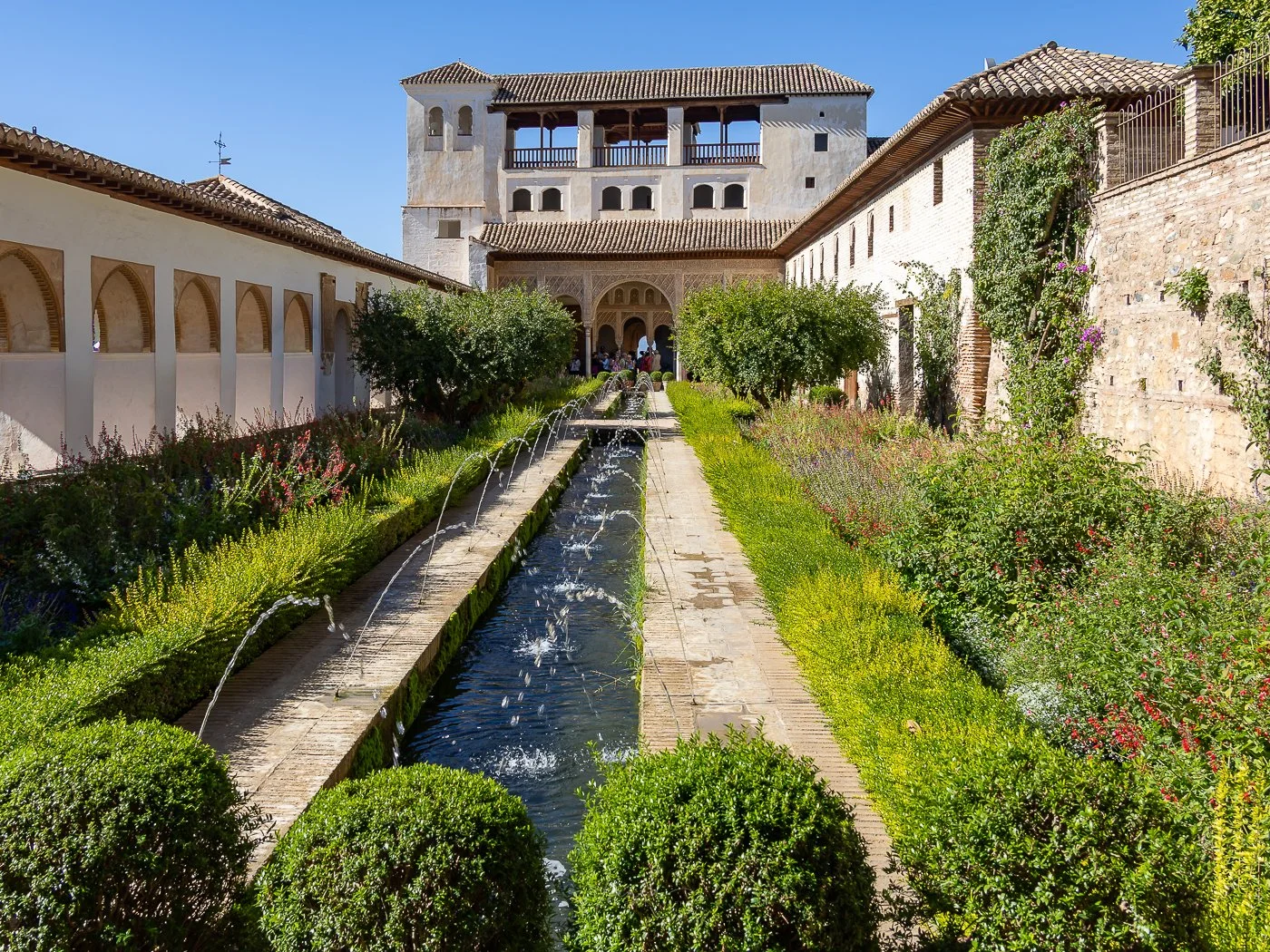
The Court of the Water Channel (Patio de la Acequia, Generalife Palace)
The Patio de la Acequia is the heart of the Generalife, where water becomes both architecture and music. Its long central channel, framed by rhythmic jets and vibrant garden beds, leads the eye toward the summer palace of the Nasrid rulers. Standing here, you can feel why this space was designed as a sanctuary of rest and contemplation. The balance of light, water, and greenery makes it one of the most peaceful corners of the entire Alhambra.
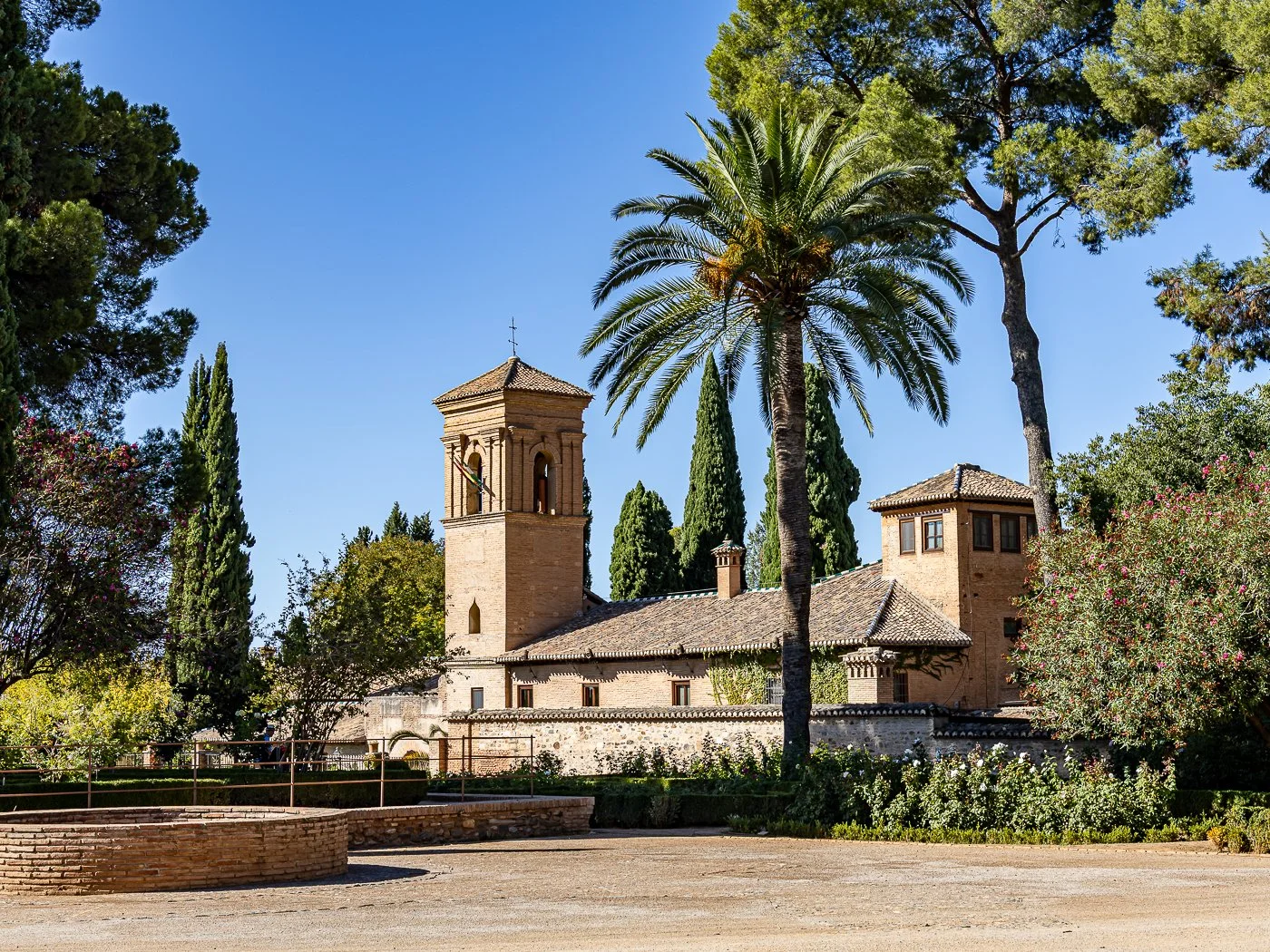
Palacio de Yusuf III and the surrounding Partal Gardens
The Palacio de Yusuf III stands quietly at the edge of the Alhambra, framed by the peaceful Partal Gardens.
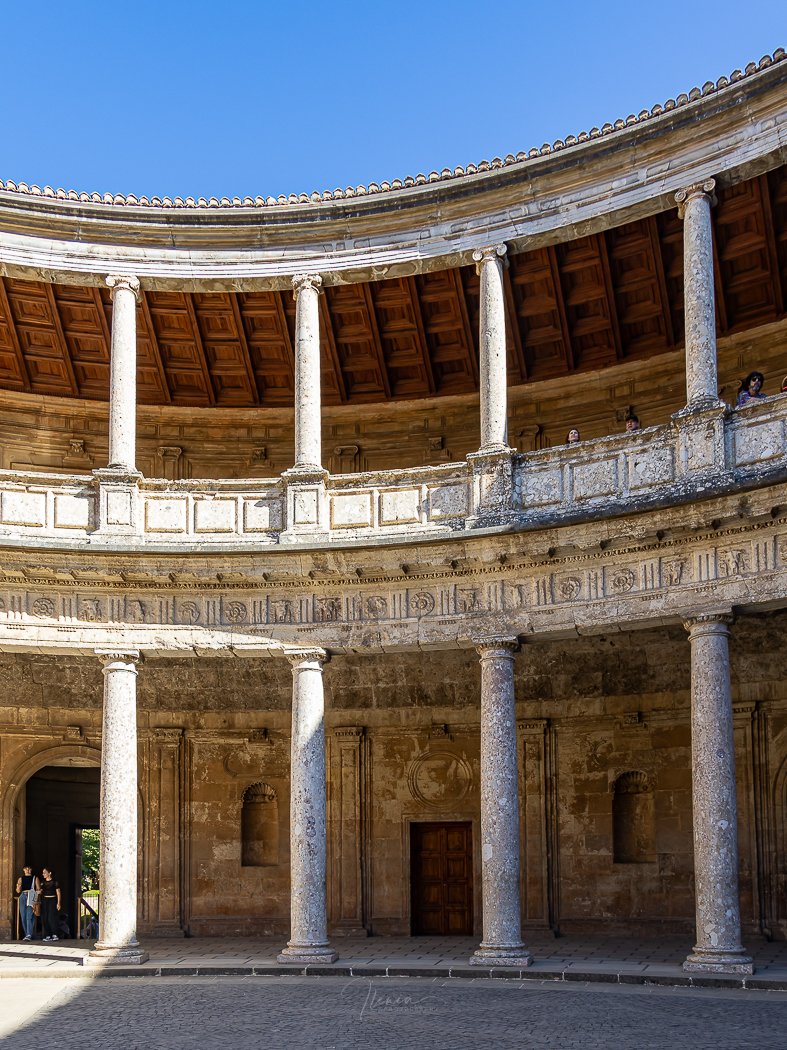
The Palace of Charles V (Palacio de Carlos V)
Stepping into the circular courtyard of the Palace of Charles V feels like entering a completely different world within the Alhambra. Its Renaissance geometry, grand stone columns, and perfect symmetry stand in striking contrast to the surrounding Nasrid palaces. The light shifts beautifully across the interior, revealing textures carved by centuries.
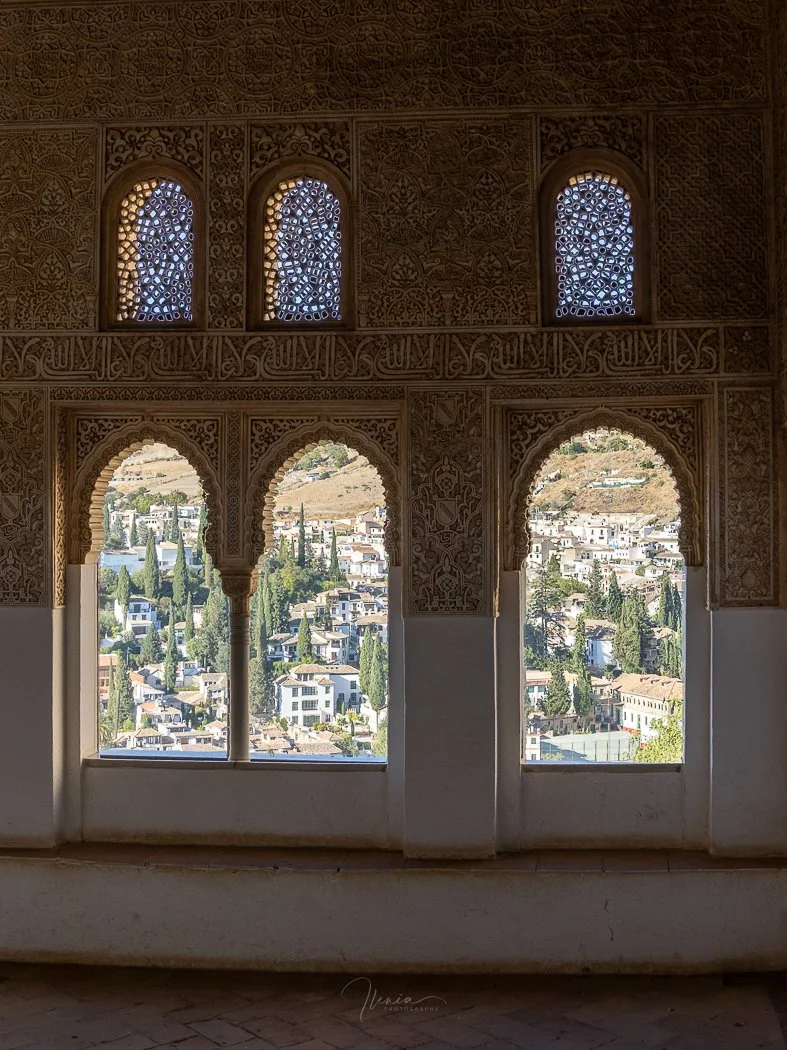
The Mirador de Lindaraja. Nasrid Palaces: inside the Sala de Dos Hermanas area.
From the Mirador de Lindaraja, the Alhambra opens toward the Albaicín like a framed painting. The carved arches and delicate latticework soften the view below, blending the quiet interior of the Nasrid palaces with the life of the city outside.
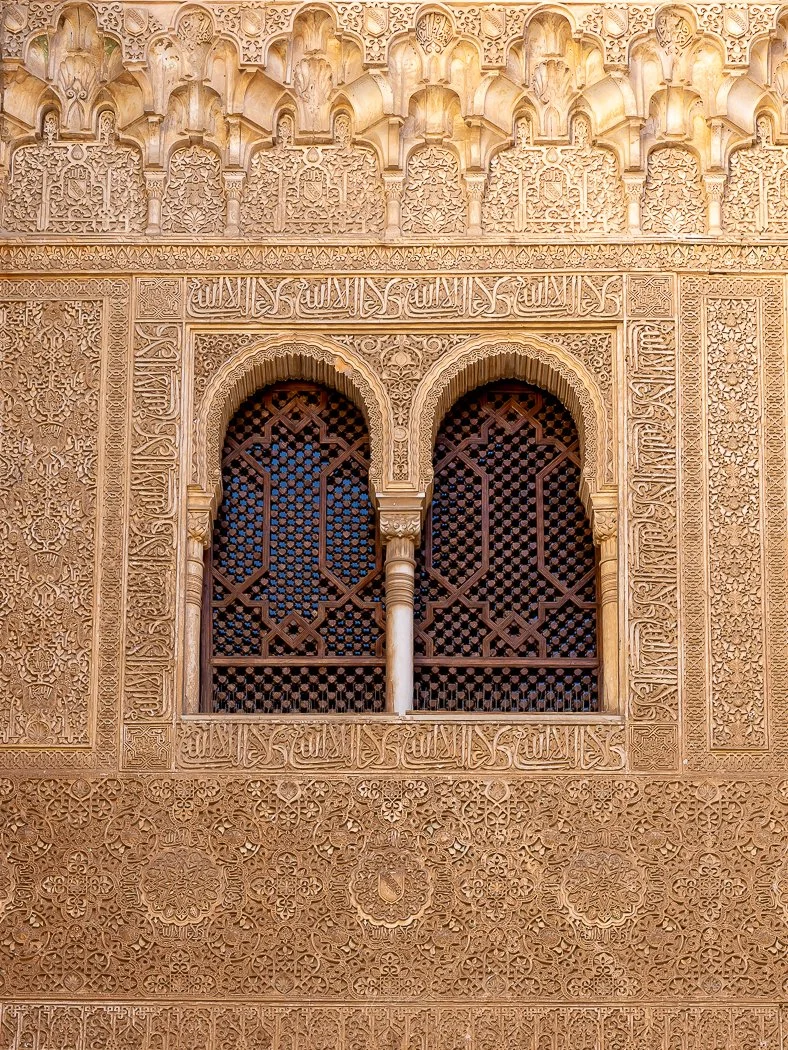
Façade of the Patio de los Arrayanes (Court of the Myrtles) inside the Nasrid Palaces.
The façade of the Patio de los Arrayanes is one of the finest examples of Nasrid craftsmanship. Its lace-like stucco, carved with verses and geometric patterns, was designed to reflect both light and meaning. Standing before it, you feel the quiet precision of an art form meant to inspire contemplation and awe.
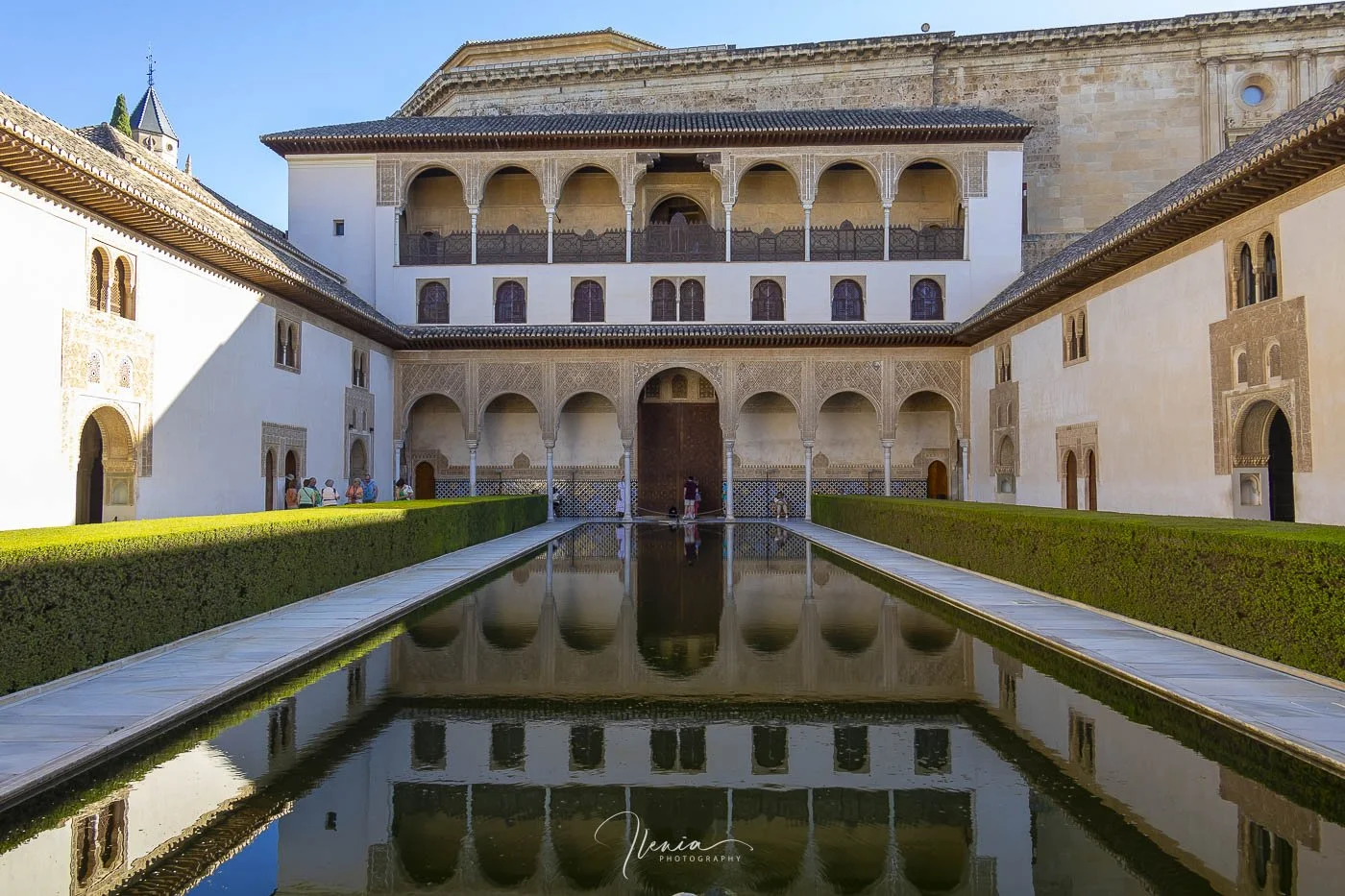
Patio de los Arrayanes (Court of the Myrtles)
The Court of the Myrtles is one of the most serene spaces in the Nasrid Palaces. The long reflecting pool mirrors the arches and carved stucco, creating a perfect balance between light, geometry, and water. Standing here, you feel the quiet elegance that defines the heart of the Alhambra.
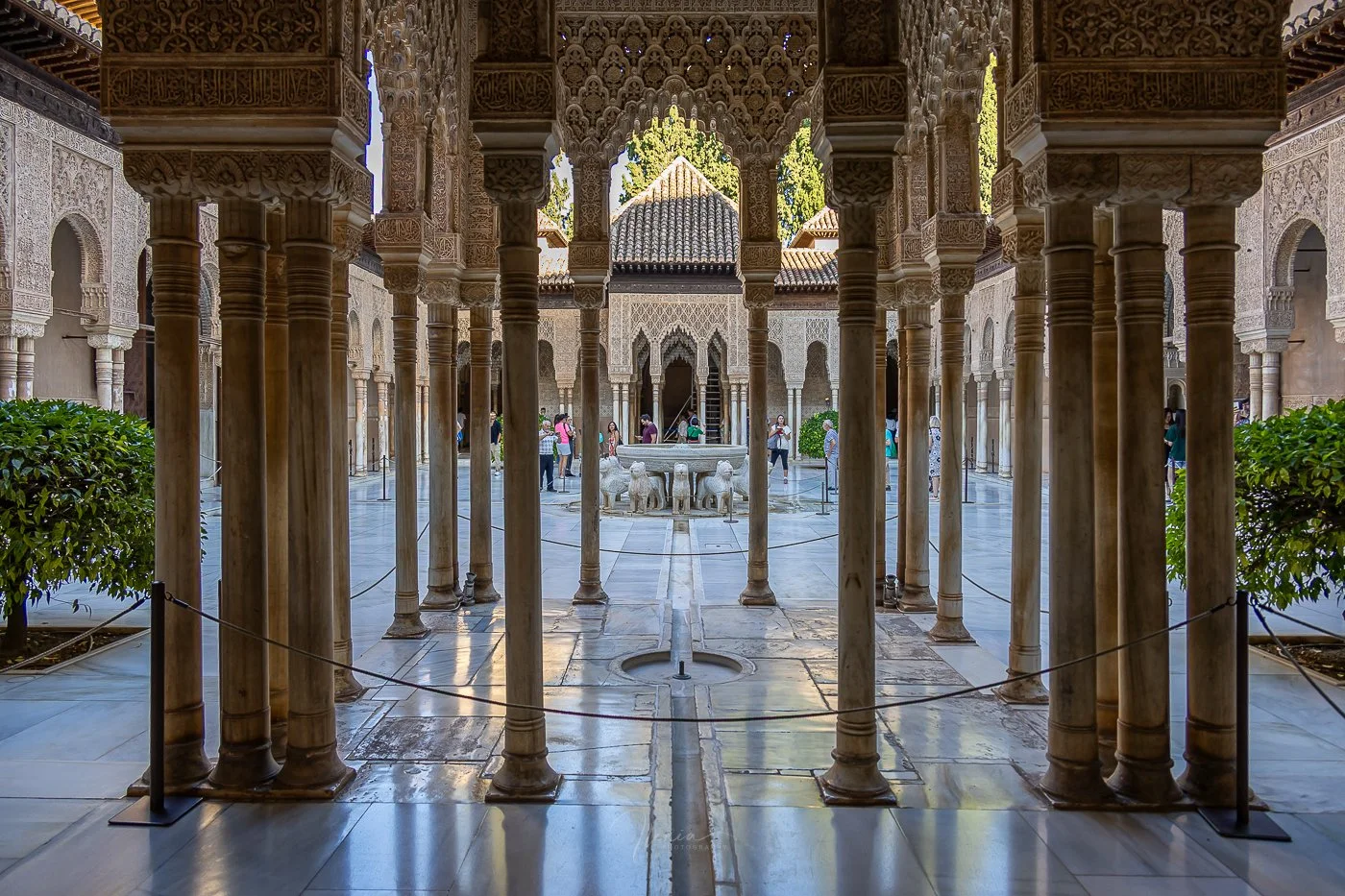
Patio de los Leones (Court of the Lions). Nasrid Palaces.
Stepping into the Court of the Lions feels like walking into the very heart of Nasrid art. The delicate forest of columns, the lace-like arches, and the iconic marble lions create a perfect balance between light, geometry, and calm. Even with visitors moving through the courtyard, there is a quiet harmony that seems to hold the space together.
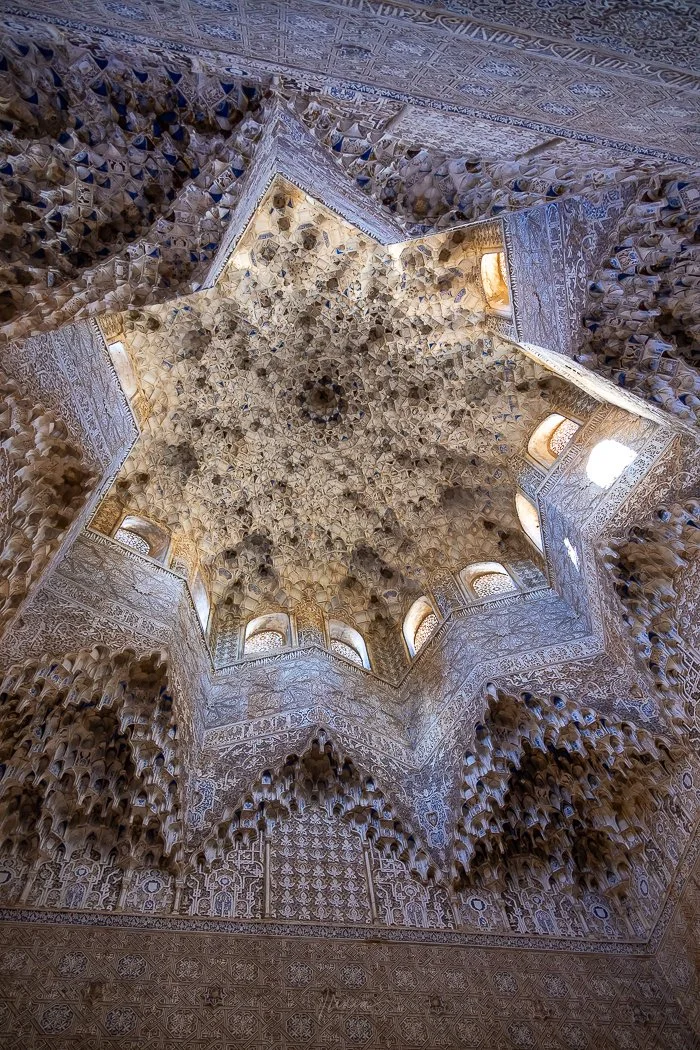
Hall of the Abencerrajes (Muqarnas Dome), part of the Palace of the Lions.
Standing beneath the Muqarnas dome of the Hall of the Abencerrajes feels like entering a celestial chamber carved entirely from light. Each detail catches the glow from the small windows above, creating a shimmering canopy that seems to float overhead.
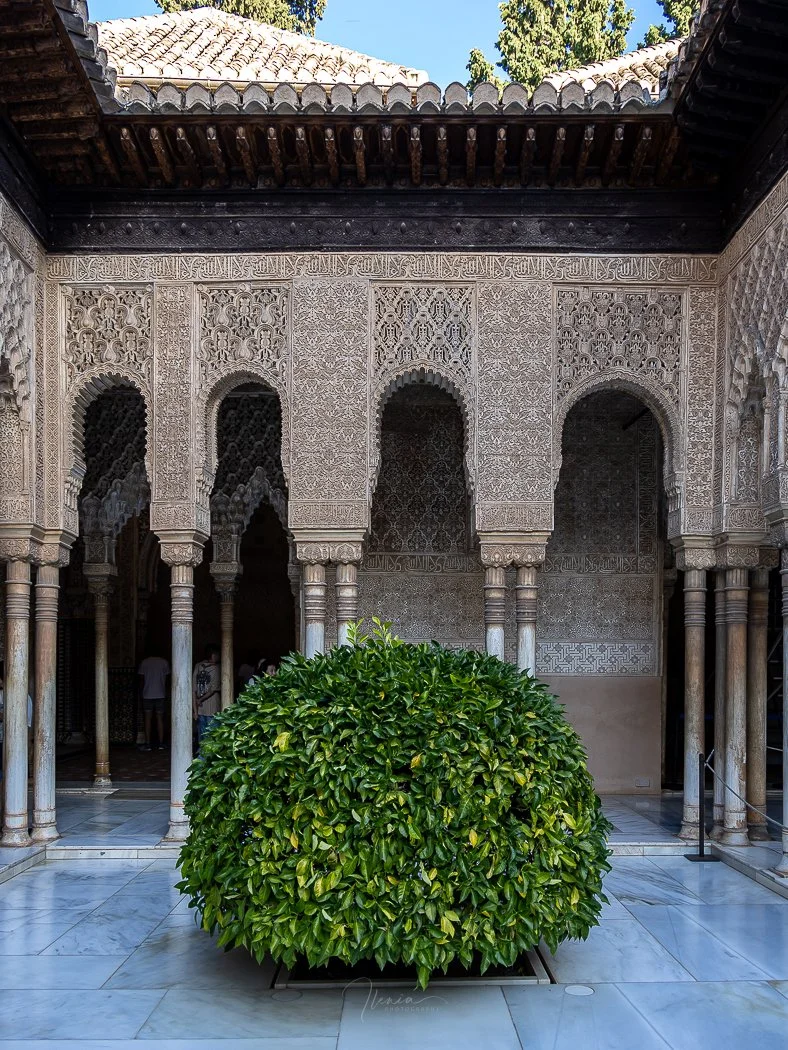
Patio de los Leones (Court of the Lions), near the Sala de los Reyes.
Just off the Patio de los Leones, near the Sala de los Reyes, the courtyard reveals a quieter side of the Nasrid Palaces. The intricate stucco work and slender marble columns frame a simple, rounded shrub that feels almost like a living sculpture.
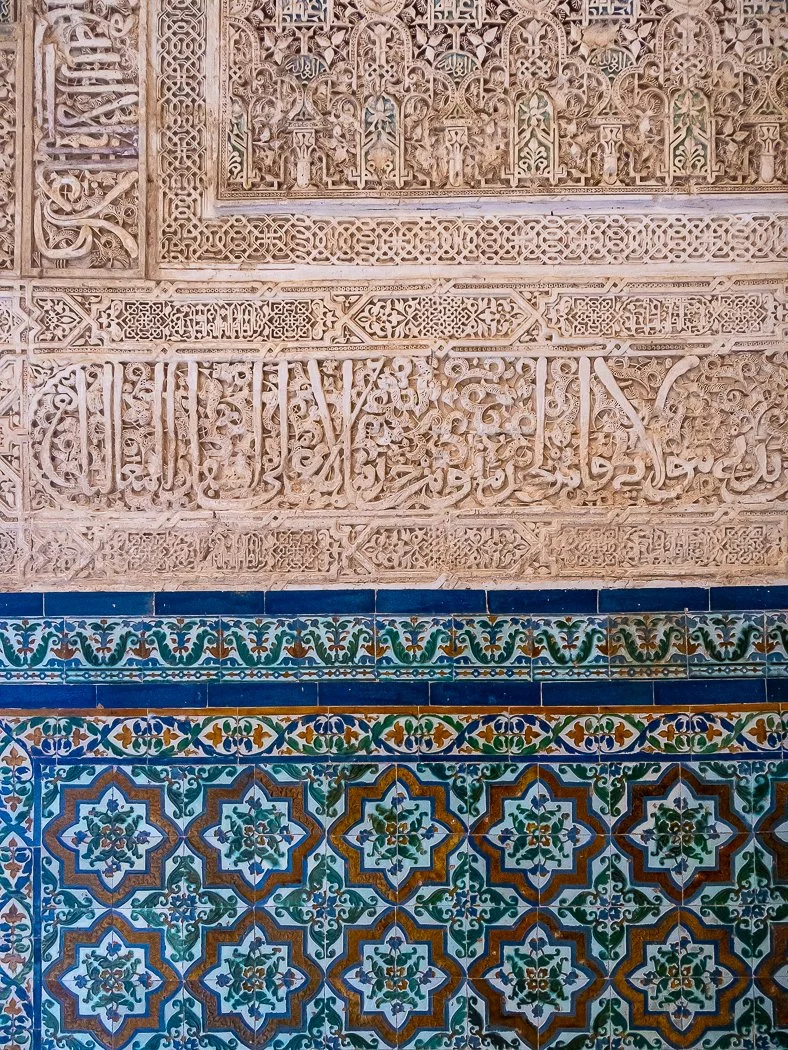
Nasrid wall decoration. Palacio de Comares, Patio de los Arrayanes (Court of the Myrtles)
This close-up of the Nasrid wall decoration in the Palacio de Comares highlights the extraordinary craftsmanship that defines the Court of the Myrtles. Delicate carved inscriptions and geometric motifs flow seamlessly into vibrant tilework below, creating a harmony of texture, color, and rhythm.
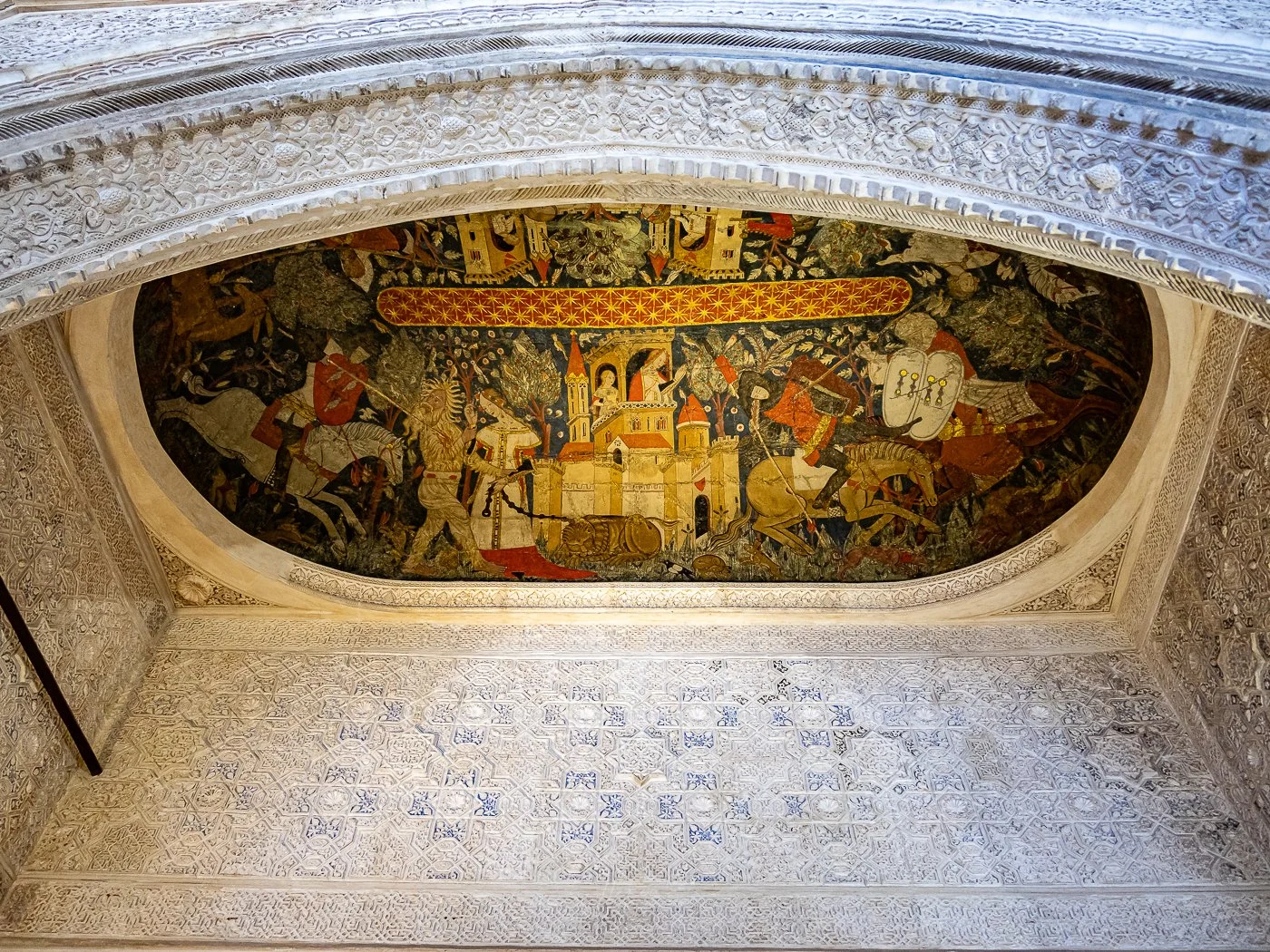
Sala de los Reyes (Hall of the Kings)
Inside the Sala de los Reyes, the painted ceiling immediately captures the eye with its vivid medieval scenes and intricate storytelling. Surrounded by delicate Nasrid plasterwork, the mural feels both unexpected and perfectly at home within the palace’s blend of cultures.